
 Transparent Pricing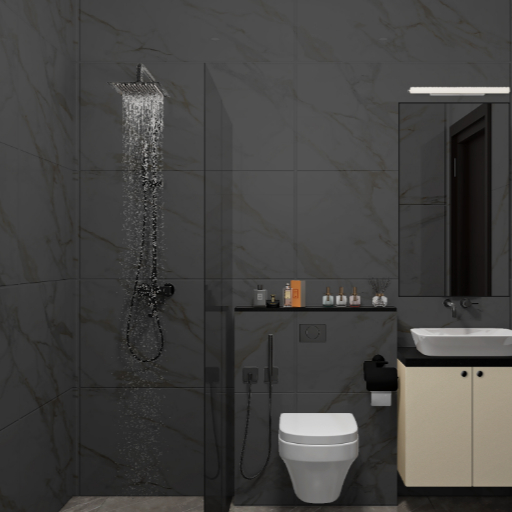
A bathroom is the smallest room in the house and the most expensive one to get wrong. Everything that fails there — waterproofing, drainage slope, ventilation, electrical protection — is buried behind tile, so the cost of a mistake is not the repair, it is the demolition needed to reach it.
This guide covers what a bathroom renovation in Bangalore actually costs, how the technical decisions should be made, and the ten mistakes that cause most rework in this city. Houzlook has designed 2,500+ homes since 2015, and the priorities below reflect what holds up through Bangalore’s monsoon humidity.
Quick Answers Before You Start
| Topic | What Bangalore homeowners should know |
|---|---|
| Timeline | Cosmetic refresh 7–14 days; full renovation 3–6+ weeks, governed by waterproofing cure, tile lead times and society approvals. |
| Waterproofing | Non-negotiable. Polymer-modified cementitious or liquid-applied membrane, 1–2% floor slope to the outlet, and a 48–72 hour ponding test before tiling. |
| Plumbing | Replace old galvanised lines. CPVC, PPR or PEX for supply; UPVC or HDPE for drainage. Provide shut-off valves and access panels. |
| Electrical safety | RCD/ELCB protection, IP44+ fittings near water, junction boxes routed outside wet zones, labelled consumer unit. |
| Ventilation | Natural ventilation where possible, plus an exhaust fan sized to room volume with a timer to clear humidity after use. |
| Tiles | Anti-skid rated tiles on wet-zone floors; glazed or porcelain on walls. Larger tiles mean fewer grout lines but need a level substrate. |
| Vanity and storage | Moisture-resistant boards only, drawers and niches planned around actual toiletries, and plumbing access retained behind the unit. |
| Accessibility | Curbless shower, grab bars, lever taps, non-slip flooring and minimal thresholds if you are planning to age in place. |
The Ten Mistakes That Cause Most Rework
- Under-specifying waterproofing for monsoon exposure, or treating it as a single coat rather than a system.
- Moving drains or fixtures without a structural and drainage check on slope, venting and stack access.
- Overlooking ventilation, which shows up months later as mould, odour and peeling ceiling paint.
- Choosing glossy, slippery floor tiles for wet zones because they looked good in a showroom.
- Skipping electrical safety — no RCD/ELCB, or fittings without an adequate IP rating near water.
- Sealing away the shut-off valves and concealed cisterns with no maintenance access panel.
- Buying fixtures before measuring, then discovering the vanity, WC or enclosure does not fit the space or the rough-in.
- Ignoring storage, so a beautifully finished bathroom fills up with bottles on the floor.
- Economising on adhesives, membranes and plumbing materials — the items that are hardest to replace later.
- Not allowing realistic curing time for waterproofing and tile adhesive because the schedule slipped elsewhere.
Nine of these ten cost almost nothing to avoid at the planning stage, and a great deal to correct after tiling.
Waterproofing: The Decision That Matters Most
Bangalore’s heavy monsoon makes waterproofing a system rather than a step. Use a layered approach: proper surface preparation, a cementitious or polymer-modified membrane across floors and wet walls, and a flexible sheet or liquid membrane at the critical junctions where most failures begin.
- Carry the membrane up shower walls to 1.8–2.0 m, not just across the floor.
- Maintain a 1–2% fall to the waste outlet, verified before tiling rather than assumed.
- Run a 48–72 hour ponding test and record the result before any tile is laid.
- Give particular attention to shower thresholds, pipe penetrations and any junction with a balcony or terrace.
- Respect cure times — typically 24–72 hours for liquid membranes and longer for cementitious systems. Premature loading compromises the layer you just paid for.
Insist that the written scope names the membrane type, the number of coats and the exact areas of application. “Waterproofing included” on a quotation is not a specification.
Plumbing, Electrical and Ventilation
Plumbing
Old galvanised iron corrodes from the inside, so if the bathroom is being opened anyway, replace supply lines with CPVC, PEX or PPR for durability and hot-water compatibility, and use UPVC or HDPE for drainage with correctly sized traps and venting. Fit accessible shut-off valves for each fixture and leave an access panel for concealed cisterns, mixer valves and floor traps. Common plumbing errors are inadequate fall to drains, poor joint sealing, incorrect trap height, and rerouting without proper venting — have the drainage layout drawn and tested before tiling closes it in.
Electrical
Bathrooms need RCD or ELCB protection, IP-rated light fittings, and switches placed outside splash zones. Keep sockets away from showers, provide properly protected points for water heaters, route conduit and junction boxes outside wet zones, and label the consumer unit. If the wiring is old, replace it now rather than reopening walls later.
Ventilation
Divide the room into wet and dry zones and keep the vanity and storage in the dry zone. Maximise natural ventilation and daylight where the plan allows. Where it does not — which describes many apartment bathrooms — an exhaust fan sized to the room volume, ducted to the exterior and run on a timer or hygrostat, is what prevents mould and protects every finish in the room.
Tiles, Sanitaryware and the Vanity
- Floor tiles: choose an anti-skid rating appropriate to wet areas. This is a safety specification, not a style preference.
- Wall tiles: glazed or porcelain for cleanability and water resistance. Larger formats reduce grout lines but demand a properly levelled substrate.
- Grout: epoxy grout in wet areas costs more and repays it in stain resistance and lower maintenance.
- Sanitaryware: one-piece WCs and wall-hung basins ease cleaning. Concealed cisterns free visual space but require a carrier frame, wall reinforcement and an access panel.
- Mixers: ceramic cartridges as standard; check flow rates, and use temperature-limiting or anti-scald valves where children or elderly family members use the room.
- Glass partitions: toughened safety glass, properly sealed and drained at the base. In hard-water areas, a treated anti-lime coating meaningfully reduces upkeep.
For the vanity, a wall-mounted unit frees floor area and makes cleaning easier. Use marine-grade plywood, PVC-laminated board or solid surface in the wet zone — ordinary board swells and delaminates. Plan drawers with internal organisers and soft-close mechanisms, put daily items in the top drawer, and add a mirrored cabinet for concealed storage. Niches in the shower and a mud shelf keep bottles off the floor and make cleaning quicker.
What a Bathroom Renovation Costs in Bangalore
These are indicative planning ranges for a typical 25–40 sq ft bathroom. A site-specific quote is essential, because plumbing stack position, apartment rules, access and material choice move these numbers substantially.
| Scope | Indicative total | What it covers |
|---|---|---|
| Basic refresh | ₹60,000 – ₹1,50,000 | Partial retiling, new sanitaryware and faucets, touch-up waterproofing, basic vanity, new lighting |
| Mid-range renovation | ₹1,50,000 – ₹4,00,000 | New wall and floor tiles, full waterproofing, replaced concealed plumbing, new vanity and glass shower, better sanitaryware and lighting |
| Premium renovation | ₹4,00,000 – ₹10,00,000+ | Layout changes, large-format tiles, stone counters, designer sanitaryware, bespoke carpentry, high-end shower systems and lighting design |
Component-level ranges
| Component | Indicative range |
|---|---|
| Waterproofing (material + labour) | ₹70 – ₹250 per sq ft |
| Civil work (demolition, screed, chases, tile laying) | ₹10,000 – ₹80,000 |
| Plumbing (supply, waste, fittings, installation) | ₹8,000 – ₹60,000 |
| Electrical (points, lighting, exhaust, heater wiring) | ₹3,000 – ₹25,000 |
| Tiles (material only) | ₹40 – ₹700 per sq ft |
| Sanitaryware suite | ₹6,000 – ₹1,50,000+ (mid-range commonly ₹20,000 – ₹50,000) |
| Shower system / frameless glass enclosure | ₹6,000 – ₹60,000+ |
| Vanity carpentry | ₹8,000 – ₹60,000 for modular units; more for custom or stone-top |
| False ceiling with recessed lighting | ₹80 – ₹400 per sq ft |
| Geyser and exhaust fan | ₹4,000 – ₹25,000 and ₹1,000 – ₹5,000 respectively |
| Design and working drawings | ₹8,000 – ₹40,000 for a single bathroom |
Add GST on materials and services, roughly 5–10% for logistics and installation, and a contingency of 10–20% — up to 25% if pipework or structural changes are likely.
Percentage allocation
As a planning template: civil work and waterproofing 20–30%, tiles and finishes 20–30%, sanitaryware and faucets 10–20%, plumbing and electrical 10–15%, carpentry and glass 10–15%, design and supervision 3–8%, fixtures and appliances 3–8%, plus the contingency above.
One Bangalore-specific warning: in apartments, relocating the facility stack to a different wall can dramatically increase cost or be prohibited outright by building bylaws. Confirm this before you fall in love with a new layout.
Controlling Cost Without Storing Up Problems
- Protect the buried items first — waterproofing, concealed plumbing and the vanity substructure. Savings here become demolition later.
- Ask for an itemised BOQ with quantities and unit rates, and compare quotes line by line rather than as lump sums.
- Clarify in writing who pays for debris disposal, lifts and hoists, parking and any municipal or society permissions.
- Either buy branded fixtures directly and account for delivery and installation, or let the contractor supply them with brand and specification named in the contract.
- Get written warranty terms for waterproofing and sanitaryware installation, not verbal assurances.
- Time the work around monsoon and festival surcharges, and allow for tile and stone lead times.
How the Project Should Run
- Site survey and scope: measure the room, check existing plumbing and drain runs, identify structural walls, and confirm society approvals.
- Design and specification: fix the wet and dry zoning, then select tiles, sanitaryware, fittings, vanity, lighting and ventilation. 3D views at this stage prevent expensive on-site changes.
- Quotation and schedule: obtain itemised quotes covering demolition, waterproofing, plumbing, electrical, tiling labour, fixtures, carpentry and painting, with agreed payment milestones.
- Execution: demolition, plumbing re-routing, electrical rough-in, waterproofing and ponding test, tiling and grouting, sanitaryware installation, painting and final sealing — in that order.
- Handover: test every fitting, close the snag list, and collect manuals, warranty cards and invoices against an agreed defects liability period.
Frequently Asked Questions
What does a full bathroom renovation cost in Bangalore?
A basic cosmetic refresh commonly runs ₹60,000–₹1,50,000, a mid-range functional renovation ₹1,50,000–₹4,00,000, and a premium rebuild with layout changes ₹4,00,000–₹10,00,000 or more for a typical 25–40 sq ft bathroom. Cost varies with the extent of plumbing and waterproofing work, sanitaryware brands, unit accessibility and finish level, so brief contractors with budget bands rather than a single number.
How long does a bathroom renovation take?
A cosmetic upgrade typically takes 7–14 days. A full gut-and-rebuild including waterproofing, tiling and plumbing re-routing usually runs 3–6 weeks. Most delays come from material procurement, curing times for membranes and adhesives, and apartment approval processes, so ask for a phased schedule with milestones.
Which waterproofing method is best for Bangalore bathrooms?
A proven liquid-applied or cementitious membrane over properly prepared surfaces, carried up shower walls to about 1.8–2.0 m, with correct mixing and the manufacturer’s full cure time. Pair it with the right floor slope and drainage. Insist the written scope states the membrane type, coat count and application areas.
How long should I wait before tiling after waterproofing?
Follow the membrane manufacturer’s cure time — typically 24–72 hours for liquid membranes and longer for cementitious products. Do not compress this to recover a slipped schedule; premature loading compromises the membrane. Confirm the test method, whether ponding or dye, with your contractor.
What are the most common plumbing mistakes?
Inadequate slope to drains, poor joint sealing, incorrect trap height or placement, rerouting without proper venting, and mixing incompatible pipe materials. Have a licensed plumber draw the drainage layout, and inspect and test the drains before final tiling.
What vanity design works best in a small Bangalore flat?
A wall-mounted vanity frees floor area and simplifies cleaning. Use drawers with internal organisers, soft-close mechanisms and water-resistant interiors in marine plywood or moisture-resistant MDF with laminate. Keep daily items in the top drawer and add a mirrored cabinet for hidden storage.
How do I make a bathroom accessible for elderly family members?
Specify non-slip flooring, grab bars at the shower and WC, a raised-height WC, lever taps, and a curbless level-entry shower where the drainage allows. Keep shower controls within easy reach and use temperature-limiting mixers. Raise this early, because door widths and thresholds are structural decisions.
How much ventilation does a Bangalore bathroom need?
Provide passive ventilation through a window or ventilator plus mechanical extraction sized to the room volume. For apartment bathrooms without windows, a timer-controlled or continuous exhaust ducted to the exterior is essential for humidity and mould control, positioned near the shower where possible.
Can I relocate the shower or WC?
It is possible but adds cost, time and complexity because of drain slope, venting and stack access. In high-rise buildings, moving fixtures horizontally beyond a limited distance may not be feasible at all. Check with an experienced plumber and your building management before committing to the layout.
Should I replace plumbing and electrical lines during renovation?
If the bathroom is old, yes. Replacing aged supply lines, concealed valves and cabling while the walls are open avoids reopening them later. Use fittings rated for bathroom use and ensure every point is protected by an RCD or ELCB.
How long does waterproofing last?
A correctly applied membrane lasts many years, but longevity depends on substrate quality, workmanship, exposure and maintenance. Watch for soft or bulging tiles, persistent damp and ceiling stains in the room below. If you have bought an older property, test the waterproofing during renovation and budget for renewal if its history is unknown.
Does a bathroom renovation improve resale value?
A well-executed bathroom with sound waterproofing, good ventilation, practical storage and durable neutral finishes generally improves buyer perception. Highly personalised choices tend not to, so put the money into the durable basics rather than statement finishes.
Spend Where It Cannot Be Redone
Every rupee spent on waterproofing, drainage slope, ventilation and concealed plumbing buys something you can never retrofit cheaply. Everything visible — tile, sanitaryware, mirrors, vanity finish — can be upgraded later without opening a wall. Sequence the budget accordingly and the room will still be sound in a decade.
If you would like a site-specific plan, Houzlook can review your bathroom, propose a layout, and prepare an itemised scope covering waterproofing, services, finishes and storage.