
 Transparent Pricing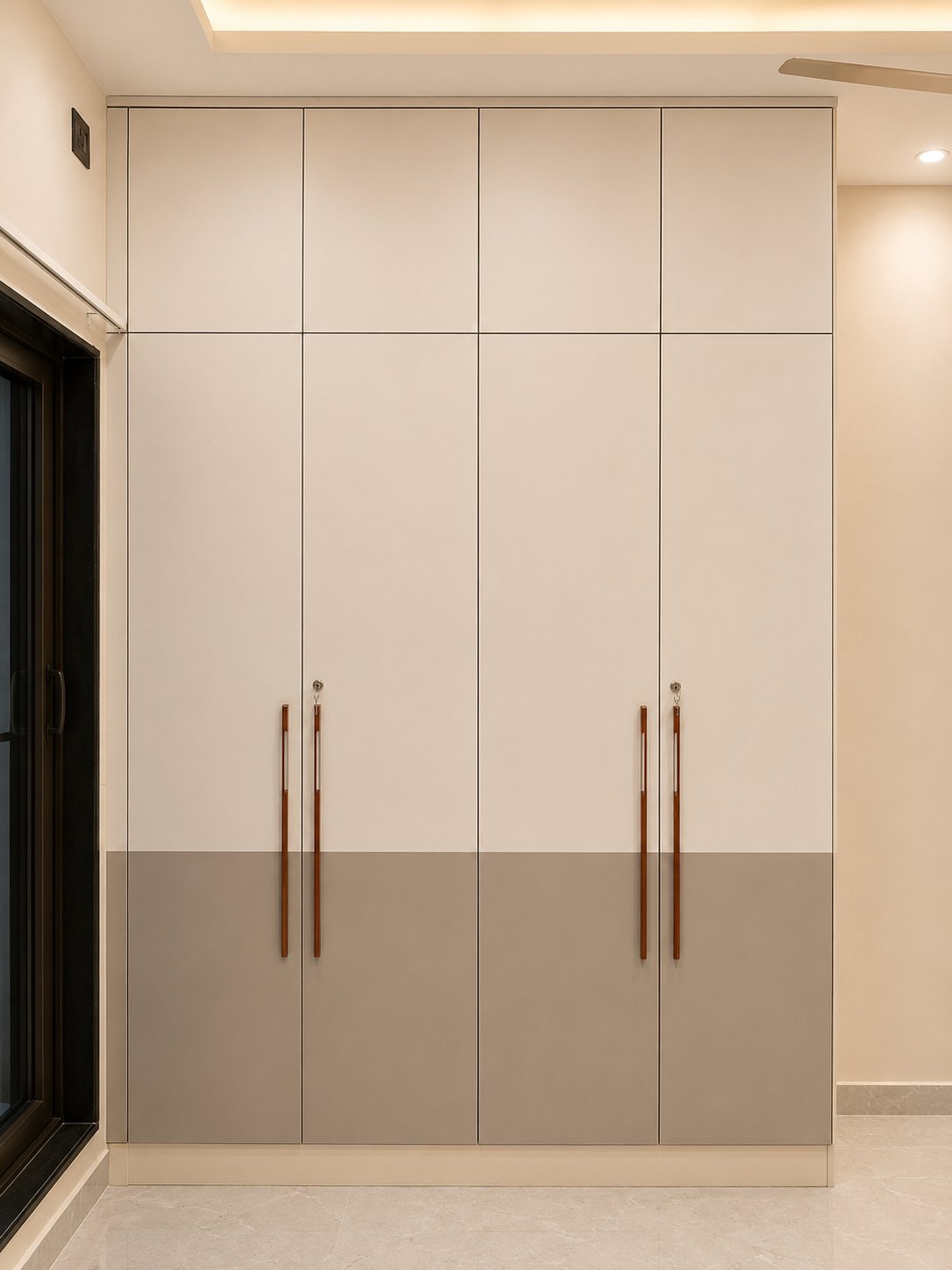
By the time a project reaches handover, most homeowners have already picked a designer, approved a BOQ and waited out the timeline. The temptation at this stage is to walk through quickly, admire the finished rooms and sign off. That is exactly when problems get locked in, because once final payment clears, a loose hinge or an unsealed board becomes much harder to get fixed for free.
This guide gives you ten specific things to physically check at handover, in the order you can realistically check them during one walkthrough. Each one tells you what good looks like, what a defect looks like, and what to do if you find one.
If you are still choosing who to hire, read our guide on how to pick the right interior design company in Bangalore. If you want to understand costs and timeline first, see interior designers in Bangalore: cost, process, timeline and what to expect.
Quick answer: before you sign off and pay the final instalment, check board and shutter quality, edge banding, hardware movement, alignment and gaps, electrical points, wet-area waterproofing, paint and putty finish, lighting, and that every item on the snag list is closed and the warranty document is in your hand. Do this with the project manager present, not after they leave.
Before You Start the Walkthrough
- Walk through in daylight. Artificial light hides gaps, colour mismatches and uneven paint.
- Bring the approved BOQ and drawings. You are checking what was built against what was promised, not against memory.
- Carry a phone flashlight, a coin or scraper, and something to write a snag list on the spot.
- Ask your project manager or site supervisor to walk through with you, room by room.
The 10 Checks
- Board and shutter material matches the BOQ. Open a few cabinets and look at the exposed inner edge of the board. The BOQ should specify the grade, for example BWP (boiling waterproof) or marine-grade plywood for kitchens and wet-area units, and MR-grade or particle board elsewhere.
Good: the board grade stamped or stated matches the BOQ line item. Defect: a cheaper board substituted without a written change request. Do: ask for the supplier invoice for that batch if you are unsure. - Edge banding is sealed on every visible and functional edge. Edge banding keeps moisture out of the board core. Run a finger along the edges of shutters, shelves and drawer fronts.
Good: a continuous, flush band with no lifting corners. Defect: a raw or exposed edge, especially inside cabinets near the kitchen sink or bathroom counter. Do: flag any exposed edge for re-banding before sign-off; it is a fast fix now and an expensive one later. - Hardware moves smoothly and matches the quoted brand. Open and close every drawer and shutter. Check hinges, channels and soft-close mechanisms.
Good: smooth, even movement with no scraping or sagging, and hardware brand matches the BOQ. Defect: stiff or loose drawers, visible gaps when a shutter is closed, or an unbranded substitute. Do: test every single unit, not a sample; a loose hinge found after handover is a service call, not a free fix in some contracts. - Carpentry alignment, gaps and levelling. Stand back and look along the length of a wardrobe or kitchen run. Check where units meet the wall, floor and ceiling.
Good: shutters are flush with each other, skirting sits tight to the floor, and gaps against the wall are filled or covered. Defect: visible gaps, uneven shutter lines, or units that rock slightly when pushed. Do: add every visible gap to the snag list; filler and touch-up paint are quick fixes before handover. - Electrical points, load and switch labelling. Test every switch and socket in the room with a phone charger or lamp, including points added mid-project for appliances.
Good: every point works, high-load points (microwave, water heater, chimney) are on dedicated circuits, and switchboards are labelled. Defect: dead points, points placed behind furniture that is already fixed, or missing earthing on kitchen and bathroom points. Do: check this before furniture is pushed back into place, while points are still reachable. - Waterproofing and sealing in wet areas. In the kitchen, under the sink, and around bathroom counters, look for sealant along joints and check that the board behind is not already damp.
Good: a continuous silicone seal at counter-to-wall and counter-to-sink joints, with no visible gaps. Defect: missing sealant, or a musty smell from under the sink unit. Do: ask for this to be resealed immediately; it is the single most common cause of swelling boards within the first year. - Paint, putty and wall finish. Run your hand across walls near windows and corners, and view large wall surfaces from an angle in daylight.
Good: an even sheen, no visible brush marks, cracks or patchy touch-ups, and colours matching the approved sample. Defect: hairline cracks at ceiling joints, patchy colour where repairs were made, or putty showing through a thin coat. Do: list patchy areas for a touch-up coat; this is far cheaper to fix before furniture is moved in. - False ceiling, lighting fixtures and switches match the design. Check that every light point works, fixtures match the approved design, and the false ceiling has no visible joints, sagging or water stains.
Good: all fixtures installed, working and matching the BOQ, with a clean, joint-free ceiling finish. Defect: a cheaper fixture substituted, a flickering light, or a visible seam in the ceiling. Do: test dimmers and multi-switch circuits specifically, since these are often wired incorrectly on first install. - Every item on the snag list from earlier walkthroughs is actually closed. If you did a mid-execution site visit and raised issues, check each one individually rather than accepting a verbal “it’s done.”
Good: each earlier snag is visibly fixed and you can confirm it yourself. Defect: an old issue marked closed on paper but still visible on site. Do: keep the final payment tied to snag closure, as agreed in the contract, not to a promise that it will be done after you pay. - Warranty document, handover photos and contact details are in your hand. The project is not complete until you physically have the paperwork, not a promise to email it later.
Good: a signed warranty certificate with start date, coverage and exclusions, dated handover photos of each room, and a named contact for service requests. Defect: “we’ll send it this week,” no written warranty start date, or a generic customer-care number with no named contact. Do: make receiving these documents a condition of your final sign-off, not a follow-up task.
A Simple Room-by-Room Checklist
| Room | Check specifically |
|---|---|
| Kitchen | Board grade under the sink, edge sealing, chimney and hob points, soft-close drawers, countertop joints |
| Wardrobes | Shutter alignment, drawer and basket movement, internal lighting if quoted, loft shutter hinges |
| Bathrooms | Counter sealing, mirror and light fixture fit, exhaust fan point, waterproofing at the vanity |
| Living and bedrooms | Paint finish, false ceiling joints, TV unit cable management, switchboard labelling |
| Balcony and utility | Washing machine point and drainage, weatherproof paint or finish, grill or railing fittings |
What to Do If You Find a Defect
- Write it down on the spot, with a photo. A verbal mention is easy to forget by the time the team leaves site.
- Get it on a shared snag list, signed by both sides. This is the document that protects you if the fix is delayed.
- Agree a closure date before you release the next payment. Most contracts tie final payment to snag closure; use that leverage while it still exists.
- Re-inspect after the fix, don’t just take a photo from the team as proof. Some issues, like a hinge adjustment, need to be tested in person.
Red Flags at Handover
- The team wants final payment before the snag list is closed, “as a formality”
- No written warranty document, only a verbal assurance
- Board or hardware brand that doesn’t match the signed BOQ, with no change request on file
- Electrical points that were not tested in front of you
- Pressure to sign off quickly because the team has “another site to get to”
- No single contact given for post-handover service requests
Bangalore-Specific Things to Watch For
- Monsoon dampness. If handover happens during or just after heavy rain, check balcony doors, window sills and any exposed board for early signs of moisture before you sign off.
- Society move-in rules. Confirm your building’s move-in slot, lift booking and deposit requirements before the final site visit, so the walkthrough isn’t rushed by a closing time limit.
- Power fluctuation testing. Bangalore sees periodic voltage fluctuations; ask whether stabilisers or surge protection were fitted for the modular kitchen and major appliance points.
How Houzlook Handles Handover
Every Houzlook project closes with a joint walkthrough against the approved BOQ, a written snag list that must be cleared before final payment, and handover documentation including a signed 11-year warranty certificate and dated photos of every room. If you want to see the manufacturing quality behind these checks before you book, you can book a factory visit, or use our interior cost calculator to plan your budget.
Frequently Asked Questions
What should I check before paying the final instalment?
Confirm that every item on the snag list is actually fixed, not just marked as done, and that you have the signed warranty document and handover photos in hand. Most contracts tie the final payment to snag closure, so use that leverage before you pay.
How long does a handover walkthrough take?
For a typical 2BHK or 3BHK, plan for one to two hours to test every switch, drawer and shutter properly. Rushing the walkthrough is the most common reason small defects get missed.
What is the most common defect found at handover?
Missing or incomplete sealant at kitchen and bathroom counter joints, and exposed edge banding near wet areas. Both are easy to fix on the spot but expensive if discovered after boards have already absorbed moisture.
Can I refuse to pay the final amount if there are unresolved snags?
Your contract should specify this; most written contracts tie final payment to snag closure. Refer to the payment schedule clause you signed, and raise unresolved items in writing before the due date.
Should I move in furniture before or after the final walkthrough?
After. Checking electrical points, floor levelling and wall finish is much harder once furniture is in place, and some defects, like unsealed edges, are easiest to fix while units are still empty and accessible.
What documents should I receive at handover?
A signed warranty certificate with a start date and coverage details, dated photos of the completed work, the final BOQ as executed, and a named contact for post-handover service requests.
A Thorough Walkthrough Protects Your Investment
None of these checks take specialised tools or expertise, only time and attention before you sign off. Go through all ten, room by room, with your project manager present, and you will walk into a finished home knowing exactly what you are getting, and with the paperwork to back it up if anything needs attention later.