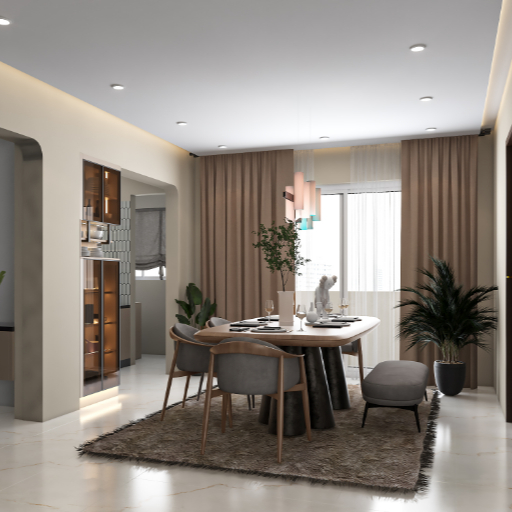
 False Ceiling Bangalore
Walk into any well-designed home in Bangalore and the first thing you notice, even if you cannot quite articulate why the room feels so refined, is often the ceiling. A well-planned false ceiling reshapes the entire character of a room. It adds dimension, conceals wires and beams, calibrates lighting, and transforms a standard apartment into a more thoughtful home.
Yet many homeowners treat the false ceiling as an afterthought, something to finalise hastily once the "real" design is finished. That is misguided. The ceiling is the room's fifth wall and deserves the same careful planning as every other element.
This guide covers false ceiling designs, materials, costs, lighting, and what to watch out for before work begins.
What Is a False Ceiling and Why Does It Matter?
A false ceiling, also called a drop ceiling or suspended ceiling, is a secondary ceiling installed below the original structural ceiling. The gap between the two ceilings is used to conceal electrical wiring, AC ducts, lighting fixtures, and sometimes insulation material that helps control temperature and sound.
A false ceiling is one of the most powerful tools in interior design. It can make a room feel taller or more intimate, define zones within an open-plan space, add drama with coves and recesses, and transform the lighting before you even choose furniture.
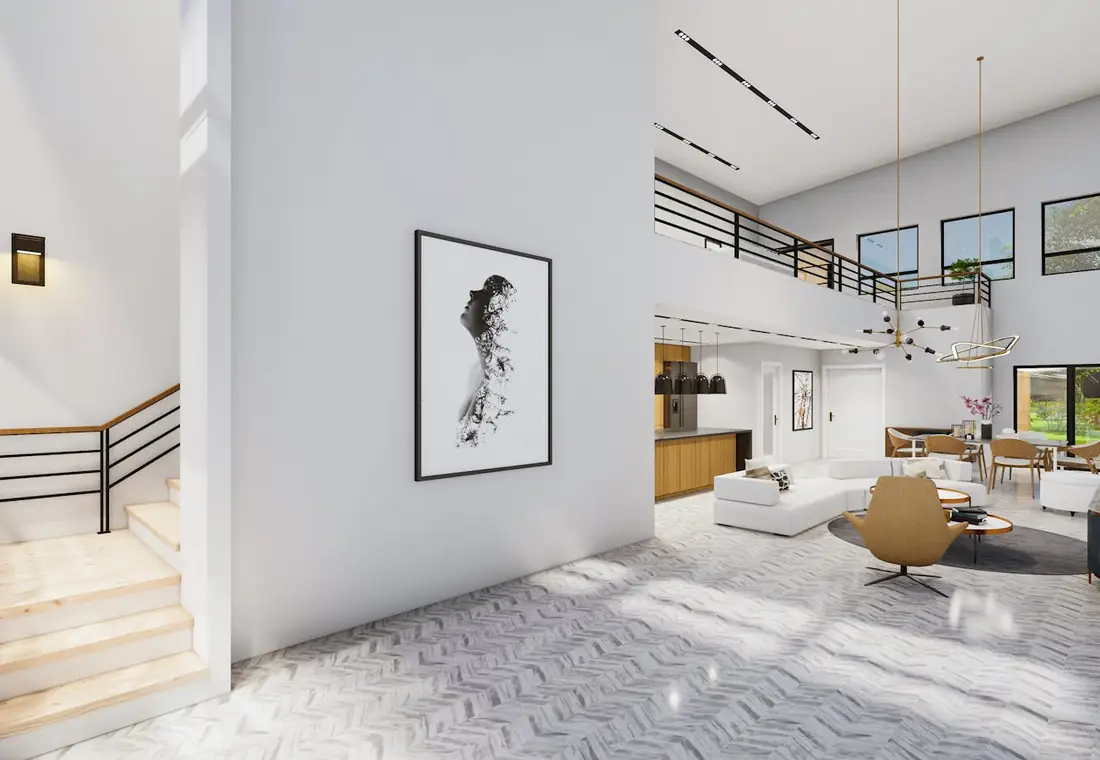
Most Bangalore apartments have 9-to-10-foot ceilings. A well-designed false ceiling, dropped carefully to around 8.5 or 9 feet in the right areas, can make a room feel much more intentional and finished.
False Ceiling Designs That Work in Bangalore Homes
There is no single "best" false ceiling design. The right choice depends on room size, ceiling height, interior style, and how you want the space to feel.
Recessed or Flat False Ceiling
This is the simplest and cleanest option: a single flat ceiling plane, typically made with gypsum board, dropped below the original slab. There are no levels, curves, or dramatic changes, just a smooth surface that hides the raw ceiling and creates a base for recessed lights.
Best for: Living rooms, bedrooms, and home offices where you want a clean, unfussy aesthetic.
Cove or Indirect Lighting Ceiling
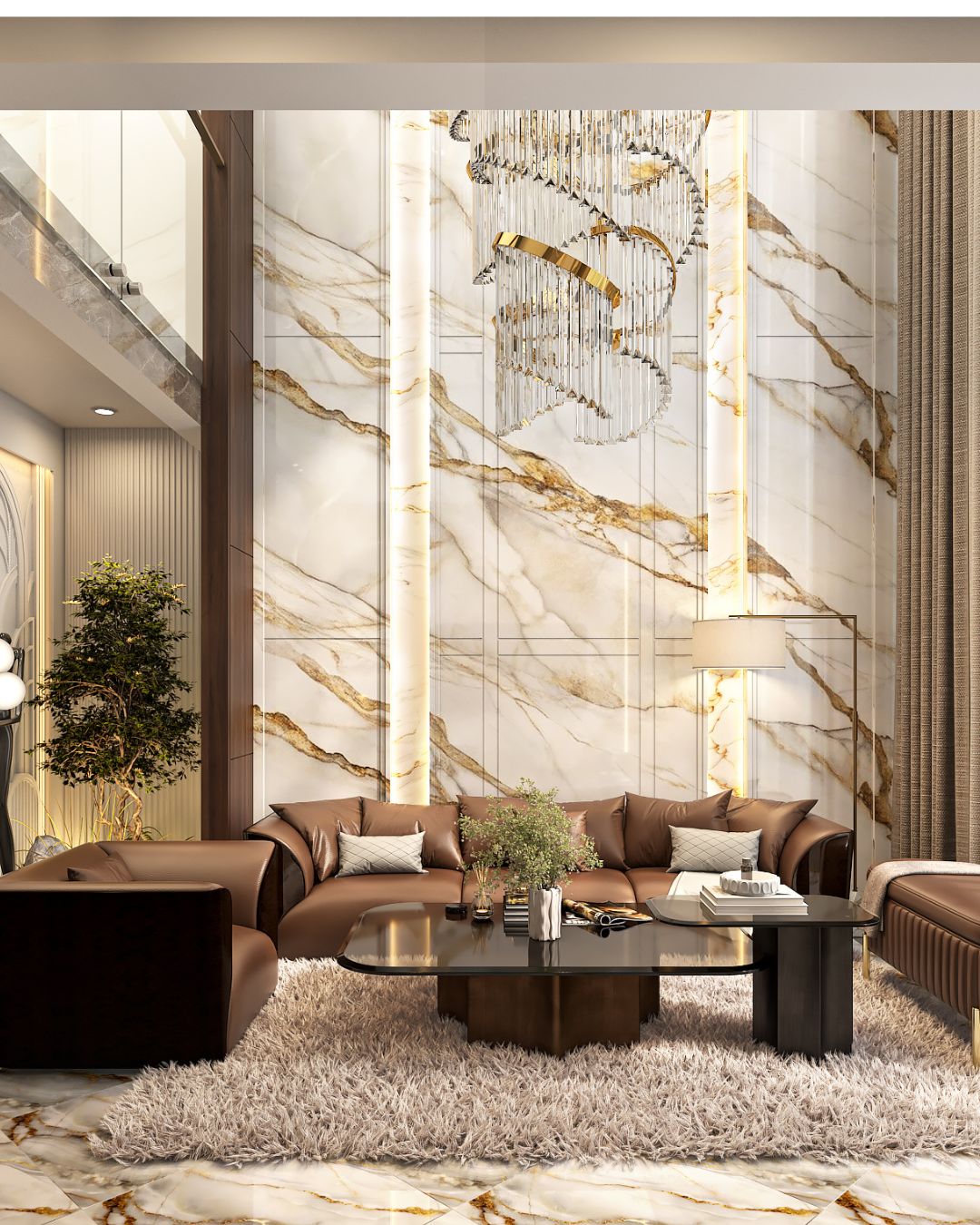
A recessed ledge built around the perimeter of the ceiling holds LED strip lights. These wash the ceiling and sometimes the walls in soft, diffused light, creating a warm halo that feels elegant and livable.
Cove ceilings are usually two-level. The outer perimeter drops to create the ledge, while the centre stays higher. This subtle layering adds visual depth without heaviness.
Best for: Living rooms, master bedrooms, and dining areas where you want evening ambience and warmth.
Coffered or Grid Ceiling
A coffered ceiling divides the surface into a grid of recessed panels. Historically used in traditional and colonial architecture, it can also work in modern homes when cleaner lines and neutral colours are used.
Best for: Living rooms with higher ceilings of 9.5 feet and above, dining rooms, and formal spaces.
Tray or Stepped Ceiling
A tray ceiling raises the central section above the border, pulling the eye upward and making the ceiling feel taller than it is. Designers often add cove lighting in the step for a layered effect.
Best for: Master bedrooms, living rooms, and formal dining rooms.
POP Jali or Perforated Ceiling Panels
This decorative ceiling element, usually made with gypsum or POP, features a cut pattern and is often backlit with LED to create light and shadow effects. It works in traditional and transitional interiors, but should be used as an accent rather than across the whole ceiling.
Best for: Pooja rooms, entry foyers, and dining rooms with a traditional design direction.
Stretch or PVC Ceiling
This newer option uses a thin PVC membrane stretched over a frame. It creates a smooth, seamless ceiling in matte, gloss, satin, or printed finishes. Stretch ceilings are waterproof and mould-resistant, making them useful in bathrooms, kitchens, and near balconies.
Best for: Bathrooms, kitchens, utility areas, and spaces with moisture exposure.
Wooden or Cladding Ceiling
Wood panels or veneer-finished boards mounted to the ceiling create warmth and texture that gypsum cannot match. In Bangalore homes, wood cladding is often used as a central panel, as a headboard extension above a bed, or as a dining area feature.
Natural wood is heavy and expensive, so many designers use engineered wood panels, MDF with veneer finish, or WPC boards. These are lighter, more moisture-resistant, and more affordable while achieving a similar look.
False Ceiling Materials: A Practical Comparison
Design creates the vision; material brings it to life. Each false ceiling material has its own cost, durability, and best-use case.
- Gypsum board: The most used false ceiling material in Bangalore homes. It gives a smooth, paintable surface, decent fire resistance, and works well for living rooms and bedrooms. Standard thickness is usually 12.5mm. Basic installed cost is around ₹65 to ₹120 per sq ft.
- POP: Plaster of Paris is still used for decorative cornices, edges, profiles, and jali panels. It can be moulded into curves and ornate details, but takes longer to cure and needs skilled application. Basic installed cost is around ₹55 to ₹100 per sq ft.
- Calcium silicate board: Denser and more water-resistant than gypsum. It works well in kitchens, bathrooms, utilities, and moisture-prone homes. Installed cost is around ₹80 to ₹140 per sq ft.
- PVC panels: Light, waterproof, easy to clean, and quick to install. Best for bathrooms, utility spaces, and covered balconies. Installed cost is around ₹45 to ₹85 per sq ft.
- Metal ceiling tiles: Durable and easy to access for services, but they create a more commercial or industrial look. Installed cost is around ₹90 to ₹180 per sq ft.
- Wooden or WPC panels: These add warmth and texture. WPC is practical for Bangalore because it is lighter, termite-resistant, and handles humidity better than natural wood. Installed cost is around ₹150 to ₹350 per sq ft.
False Ceiling Cost in Bangalore in 2026
False ceiling costs in Bangalore vary based on material, design complexity, room size, lighting plan, and quality of execution. For a deeper pricing page, review Houzlook's false ceiling cost guide.
- Basic flat gypsum ceiling: ₹65 to ₹90 per sq ft.
- Cove or two-level gypsum ceiling with LED strip: ₹90 to ₹140 per sq ft.
- Tray or stepped ceiling design: ₹110 to ₹160 per sq ft.
- POP decorative ceiling with profiles: ₹80 to ₹130 per sq ft.
- Calcium silicate ceiling for bathrooms or kitchens: ₹90 to ₹150 per sq ft.
- PVC panel ceiling for utilities or bathrooms: ₹50 to ₹90 per sq ft.
- Wooden or WPC feature ceiling: ₹160 to ₹350 per sq ft.
- Stretch or PVC membrane ceiling: ₹120 to ₹200 per sq ft.
For a typical 2BHK apartment in Bangalore, around 850 to 1,000 sq ft carpet area, a well-executed false ceiling across the living room, two bedrooms, and kitchen may run roughly ₹1.2 lakh to ₹2 lakh for mid-range work. Premium execution with cove lighting and feature elements may range from ₹2 lakh to ₹3.5 lakh.
Design complexity is the primary cost driver. More levels, curves, profiles, and lighting integration mean more material, more labour, and more coordination.
False Ceiling and Lighting Are One Decision
This is the most important thing to understand. Your false ceiling and lighting plan must be designed together. A ceiling designed without thinking about lights is incomplete.
Plan three layers: ambient light for general illumination, task light for reading, cooking, or working, and accent light to highlight art, architecture, or texture. Cove lighting provides ambient warmth, recessed spots support task lighting, and a pendant or chandelier can create a focal point.
At Houzlook, ceiling designs are developed alongside the lighting plan because separating them often results in a ceiling that looks good in photos but feels flat to live in.
Things to Watch Out For Before Work Begins
- Ceiling height: In a room with a 9-foot ceiling, a 12-inch drop brings the finished height to 8 feet, which can feel tight. Aim for no less than 8.5 feet in living areas and bedrooms.
- Waterproofing above: Check for seepage or leak history before installing gypsum. A water stain spreading across a new ceiling is expensive to fix.
- AC duct routing: If you are installing ducted air conditioning, coordinate the AC and ceiling design together.
- Access panels: Electrical junction boxes or plumbing valves hidden above the ceiling need access panels.
- Contractor skill: Invisible joins, level coves, smooth paint, and clean lighting require real craftsmanship. Ask to see completed work before committing.
How Houzlook Approaches False Ceiling Design in Bangalore
At Houzlook, false ceilings are never treated as isolated decisions. Every ceiling design is developed as part of the complete interior plan for the room, alongside flooring, wall treatments, furniture layout, and lighting.
Our designers create detailed 3D renders before execution, so you can see exactly how the ceiling, lighting, and room effect will look before work begins. Our in-house team handles execution from start to finish, with quality control aligned to Houzlook standards.
Every false ceiling we design and build in Bangalore is covered under Houzlook's 11-year warranty. If a board cracks, a join opens, or a cove light fitting works loose, we come back and fix it.
We have experience centres in HSR Layout and Sarjapur Road, open Monday to Saturday, 10 AM to 7 PM. Book a free design consultation, and our team will visit your home, assess the space, and give you a clear design and cost proposal.
Houzlook has designed and executed interiors for 2,500+ homes across Bangalore and Bhubaneswar since 2015, with in-house manufacturing, 3,000+ 3D renders delivered, and an 11-year warranty on every project.